Orlando to Clearwater Beach: The Drive Is Free, the Parking Is Not
By Matt Spaulding · September 2, 2026
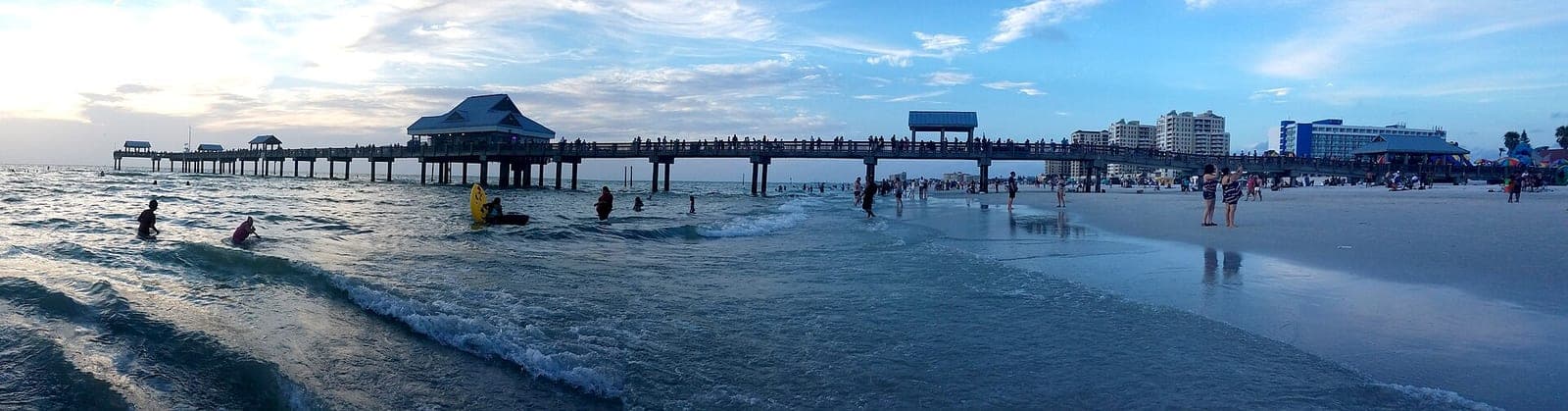
Photo: TampaThings.com, CC BY-SA 4.0, via Wikimedia Commons
Everyone driving in Florida braces for tolls, and on this route there are none. Florida's Turnpike Enterprise's own toll calculator, run for Orlando to Clearwater Beach in a two-axle car, returns $0.00 — with SunPass and without one. I-4, I-275 and State Road 60 across the Courtney Campbell Causeway are not toll facilities, and neither is the Memorial Causeway onto the beach itself. The Sunshine Skyway and the Pinellas Bayway nearby both charge, which is why the assumption sticks, but they are not on this drive.
The money goes at the other end, and it goes hourly. That is the thing worth understanding before you set off.
How long it takes, according to two authorities that disagree
VISIT FLORIDA, the state tourism corporation, puts Clearwater Beach at "approximately 106 miles southwest of Orlando" and says the drive "typically takes about two hours". Visit St. Pete/Clearwater, the county's own destination marketing organisation, says on its Orlando page that "we're only 90 minutes from Orlando".
Both are official and they differ by half an hour. Plan on the two-hour figure: it is the more conservative of the two, and the 90-minute number appears on a page whose job is to make the trip sound short. Neither includes the time to find a space once you arrive, which on a good weekend is not a rounding error.
The one way to get charged on a free road
I-4 Express is the exception, and it is a trap specifically for rental cars. The express lanes run along the Orlando end of the drive, they are dynamically priced, and they are open only to vehicles with a SunPass transponder — so a visitor in their own out-of-state car simply cannot enter them.
A rental usually has a transponder fitted. Drift into the express lanes on the way out of Orlando and you have both bought a toll and, on most rental toll programmes, triggered a daily service fee that applies for every day of the rental rather than the one you used it. On a drive that otherwise costs nothing, that is the whole toll bill. Stay in the general lanes; they go to the same place.
Do not trust a fixed figure for the express lanes either. FDOT's calculator shows a minimum of $0.50 per segment and states plainly that locations "may be higher during normal operations", which means any number you read is a floor and not a price.
Parking is the actual cost, and it has no ceiling
The City of Clearwater charges $3.50 per hour in its beach lots and $4.00 per hour on-street. There is no daily maximum published anywhere. The meter simply keeps running, so a six-hour beach day is about $21 in parking and an eight-hour one about $28 — that is our arithmetic, not a rate the city publishes, because the city publishes no day rate at all.
On-street looks like the win and is the worse deal twice over: it costs more per hour and it is capped at five hours. The lots have no time limit within their operating hours, which for nine of the ten city lots run 6 a.m. to 11 p.m.
Payment is pay-by-plate through kiosks, the ParkMobile app, or by texting CLEARWATER to 727563. Your number plate is the ticket, so it has to be right.
The lot you reach first is the one you cannot use
Coming off the Memorial Causeway, the first big lot is the Municipal Marina at 25 Causeway Boulevard — 346 spaces, easily the largest on the beach. It is also the only city lot with a two-hour limit, which makes it useless for a beach day. The $1.00-an-hour extension advertised alongside it is not a public discount: it needs a daily code from a boat tour operator or a marina restaurant tenant.
The second trap follows from the first. Parking payments are not transferable between lots — the city says so explicitly, and enforcement checks your plate against that specific zone. Buy two hours at the Marina, decide you want to be nearer the water, and you start paying again from zero at Pier 60.
One more thing worth knowing before you go hunting: no public parking is allowed north of the Acacia Roundabout, and the city describes that as strictly enforced. The quiet residential end of the beach is quiet because you cannot park there.
The free way in, if your timing suits it
There is a genuine park-and-ride, though no single page spells it out. Downtown Clearwater's city lots and garages are free on weekends, on holidays, and on weeknights after 6 p.m. From downtown, the Jolley Trolley runs to the beach seven days a week at $2.25 cash for a single ride — exact change, drivers carry none.
So a Saturday or Sunday arrival can park downtown for nothing and ride across for a couple of dollars a head, which for a family is the difference between a free parking day and thirty dollars. On a weekday before 6 p.m. that arithmetic collapses, because downtown is charged then and you may as well take the beach lot.
Winter is not there, and the pier is shut
Two things send people home disappointed, and both are avoidable.
Winter, the tail-less dolphin from the Dolphin Tale films, died on 11 November 2021. The Clearwater Marine Aquarium says so on its own site — and still markets her heavily, with a permanent exhibit, a scheduled daily talk and a VR experience built around her. Families still arrive expecting to meet her. Adult admission is $41.95 as published at the time of writing, with "seasonal rates may apply" printed under the table, and the aquarium runs 10 a.m. to 5 p.m. with last entry half an hour before close. The aquarium does not publish a parking rate at all, saying only that seasonal rates apply, so budget for an unknown there.
And Pier 60's fishing pier is closed until further notice after hurricane damage. The city's beach page says only the landward stub is open and the bait house is shut; confusingly, two other pages on the same city site still advertise fishing passes and rod rentals. If fishing off the pier is the reason for the drive, that reason is currently gone.
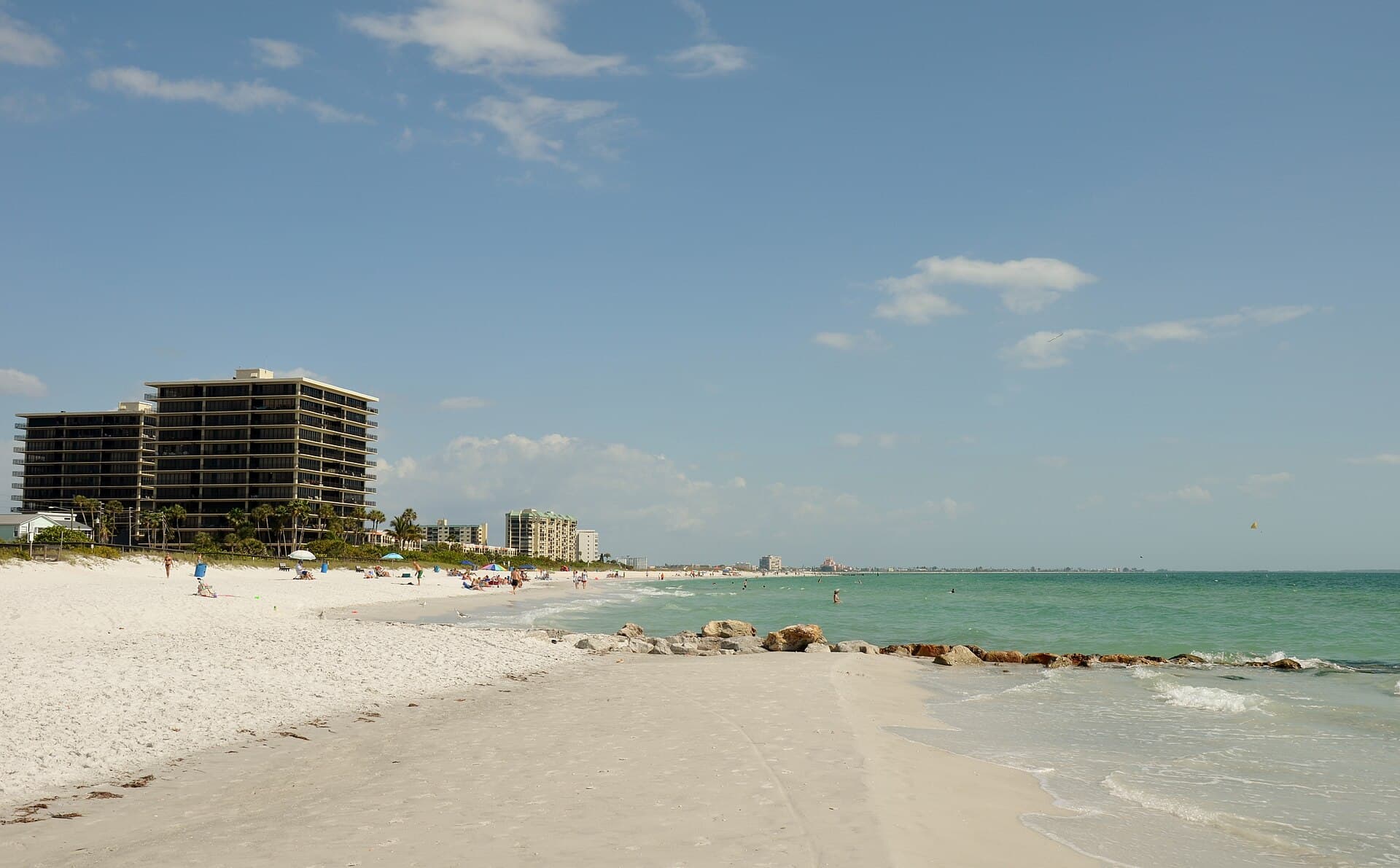
What still works costs nothing. Pier 60 Park is free and open 7 a.m. to 9 p.m., the beach is free and open around the clock, and the Sunsets at Pier 60 festival runs nightly and year-round, weather permitting. Do not look up a clock time for it: it runs from two hours before sunset to two hours after, so it is advertised as 6–10 p.m. in summer and 4–8 p.m. in winter and both are the same rule.
So is it worth the drive?
For a beach day, yes, and the maths is better than most Orlando day trips because the road itself is free. Two hours out, two hours back, and the only unavoidable cost is the meter. Go on a weekday and you will park easily; go on a nice weekend and the causeway backs up, which the county's own planning body has described as queuing for miles from the roundabout back to downtown.
Lifeguards cover 10 a.m. to 5 p.m. only, which is worth knowing given the beach's most popular hour is sunset, well outside that window.
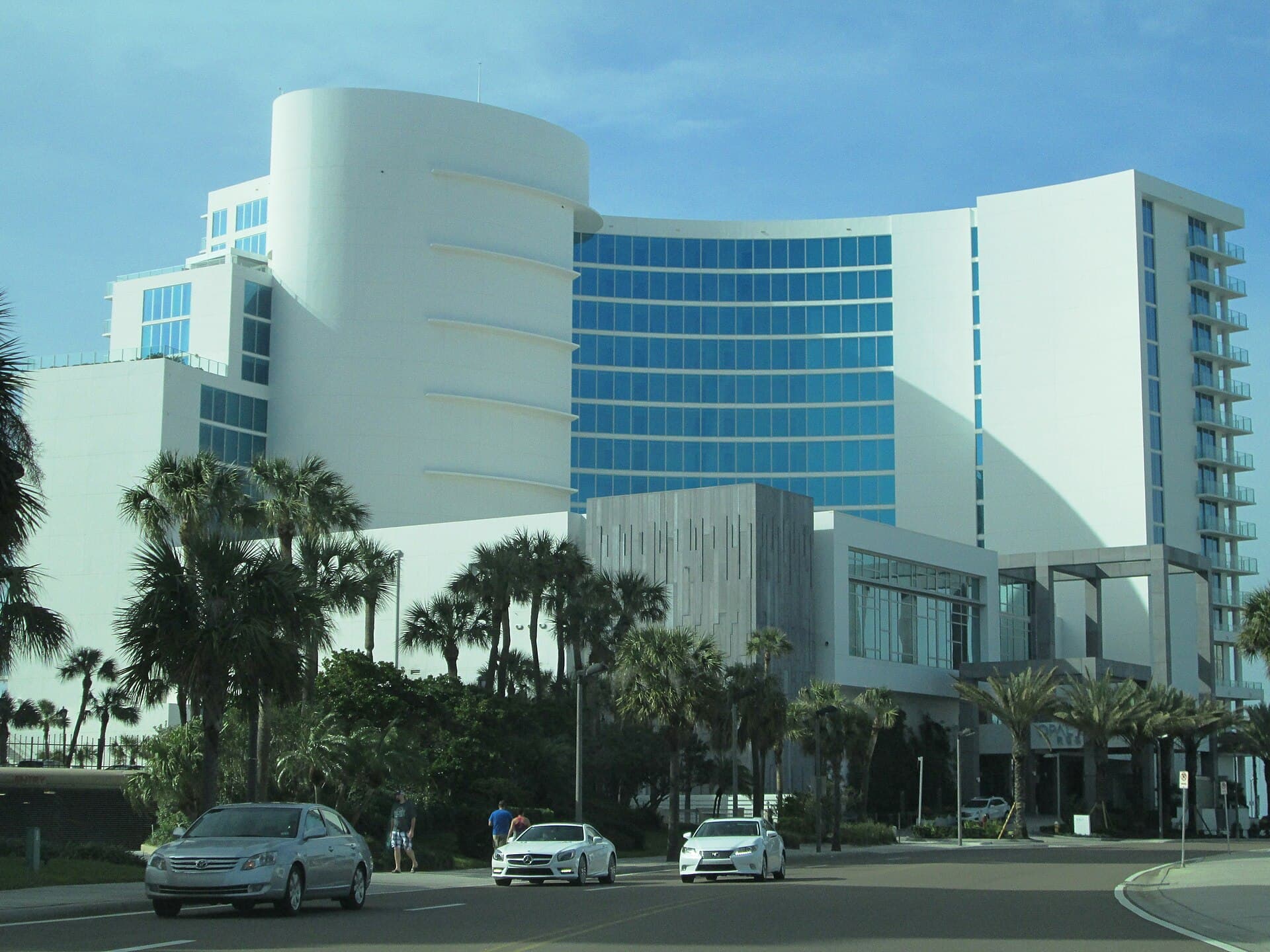
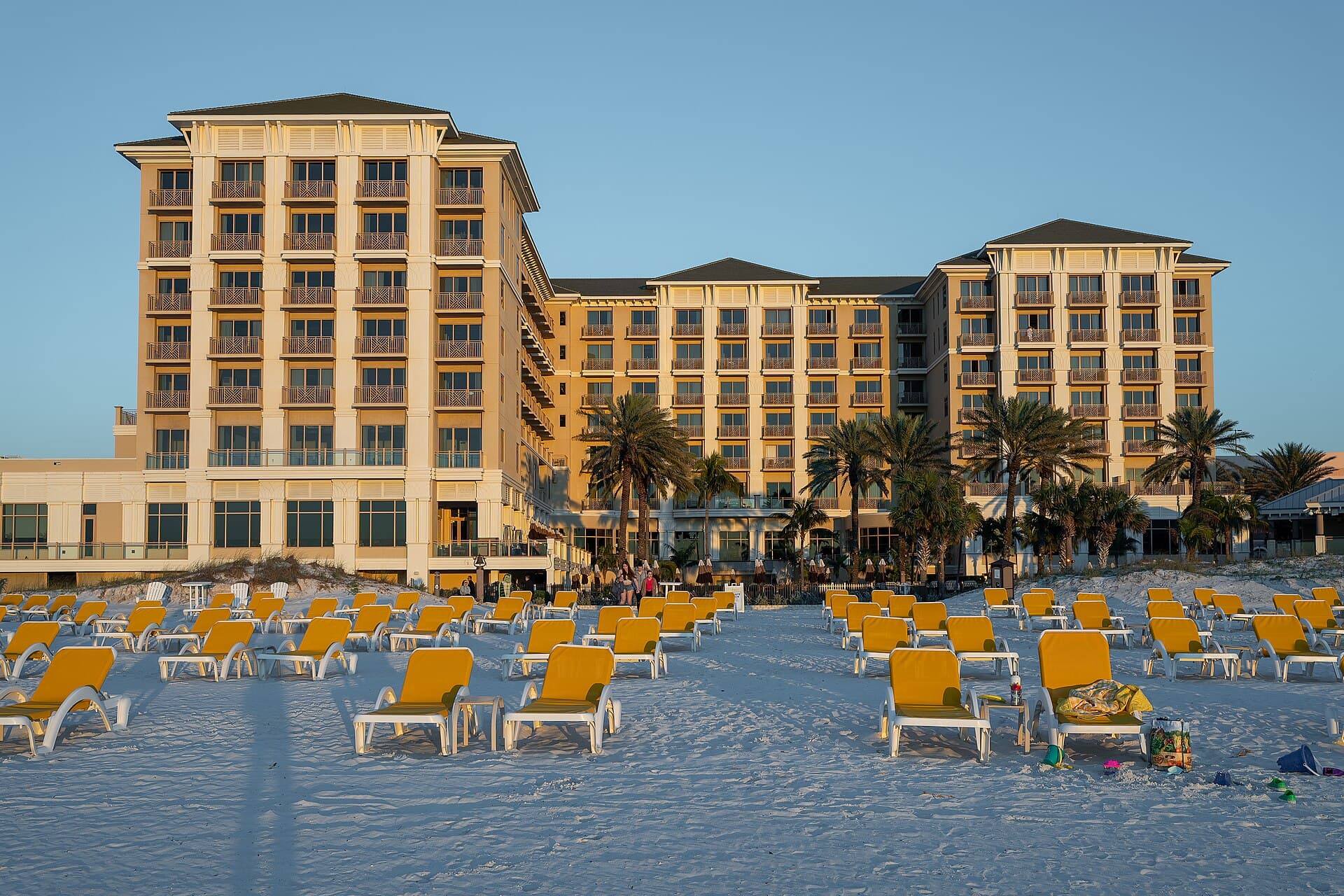
The honest alternative is not to drive it at all. Four hours in the car to sit on sand is a real chunk of a holiday, and if the Gulf is what you came for, staying a night removes the drive from both ends of the day — compare Clearwater Beach hotels against another night on International Drive before you commit to the round trip. Opal Sands and Sandpearl put you on the sand itself; Palm Pavilion Inn is the small one a block back. All three solve the parking problem by making it someone else's.