How Many Days Do You Need in Miami? Start With the Driving
By SuddenStay Editorial · August 21, 2026
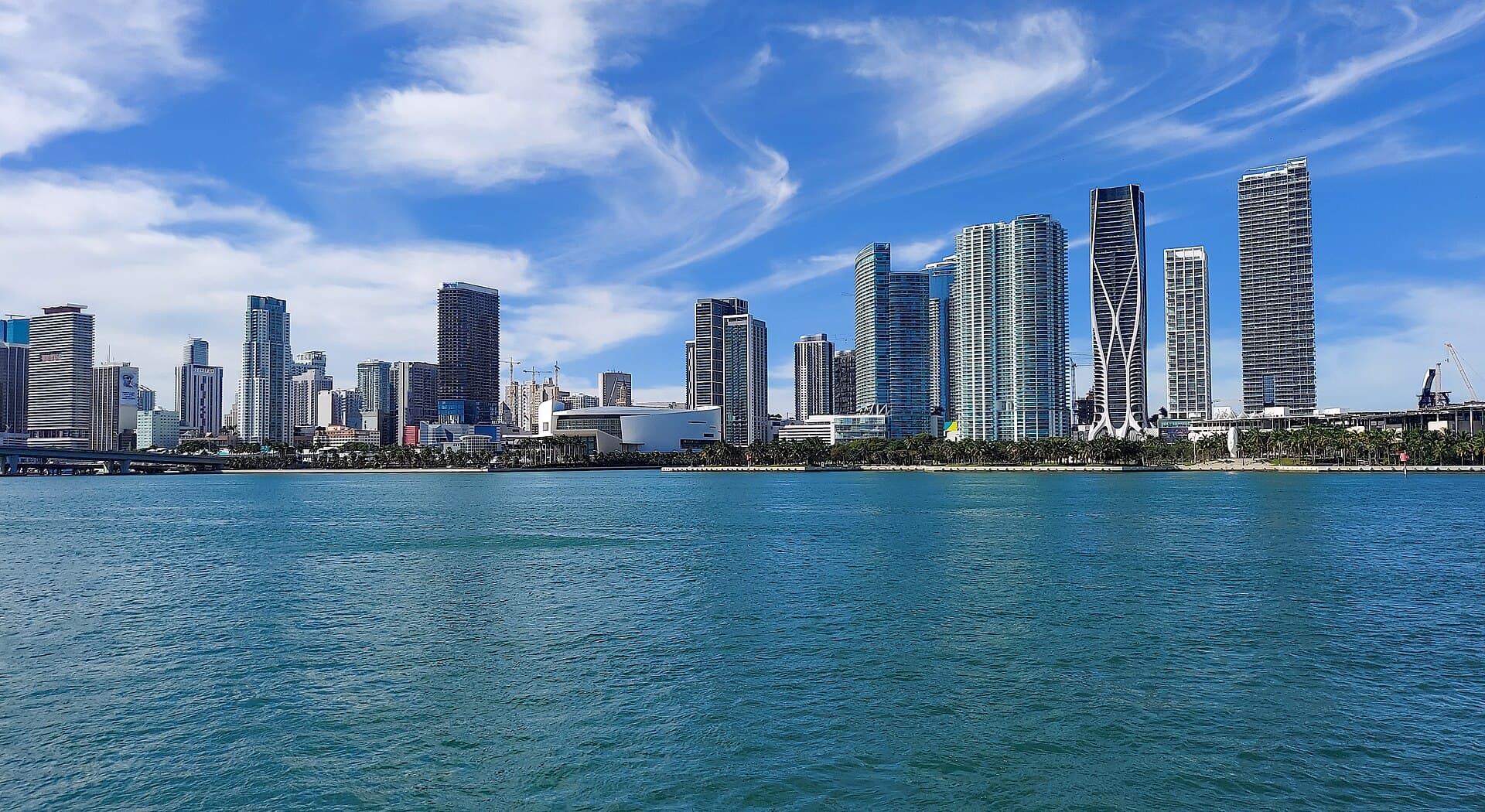
Photo: P. Hughes, CC BY-SA 4.0, via Wikimedia Commons
Most Miami itineraries fail the same way. Someone lists eight things, notices that none of them is more than about forty minutes from the hotel, and books four of them into a single day. The mileage is genuinely modest. The problem is that Miami's attractions sit in four different directions from downtown, and almost none of them connect to each other. So the useful planning question is not what you want to see. It is which direction you are pointing the car on each given day.
Every drive time below comes from routing the real road network with no traffic in the model at all. Treat them as a floor, the best you could possibly do at four in the morning, and add your own pessimism for anything between seven and ten or four and seven.
Downtown is the one part that works without a car
The Metromover is free, with no fare gates and nothing to buy, and it runs 5:30am to 10pm every day. Within its footprint it covers more than people expect: Bayside Marketplace and Bayfront Park, the Perez Art Museum and the Frost Museum of Science, the Kaseya Center, Freedom Tower, the Arsht Center and Brickell City Centre. That footprint is the catch, because it is about two miles end to end, from Financial District in Brickell up to School Board in the Omni area, and the system stops there.
Three of our Miami entries sit inside that circle and stack neatly into one morning. Skyviews is a 12 to 15 minute ride to about 200 feet in a climate-controlled gondola, so it is a stop rather than an outing. The Biscayne Bay cruise is ninety narrated minutes on the water, though budget nearer two and a quarter hours door to door once you account for the voucher exchange the operator wants 45 minutes ahead. The Big Bus loops nine stops out to South Beach, Wynwood and Little Havana in about two hours ten minutes, with departures every half hour, which makes hopping off more expensive in time than it sounds.
Everything else needs the car, including the things that look close
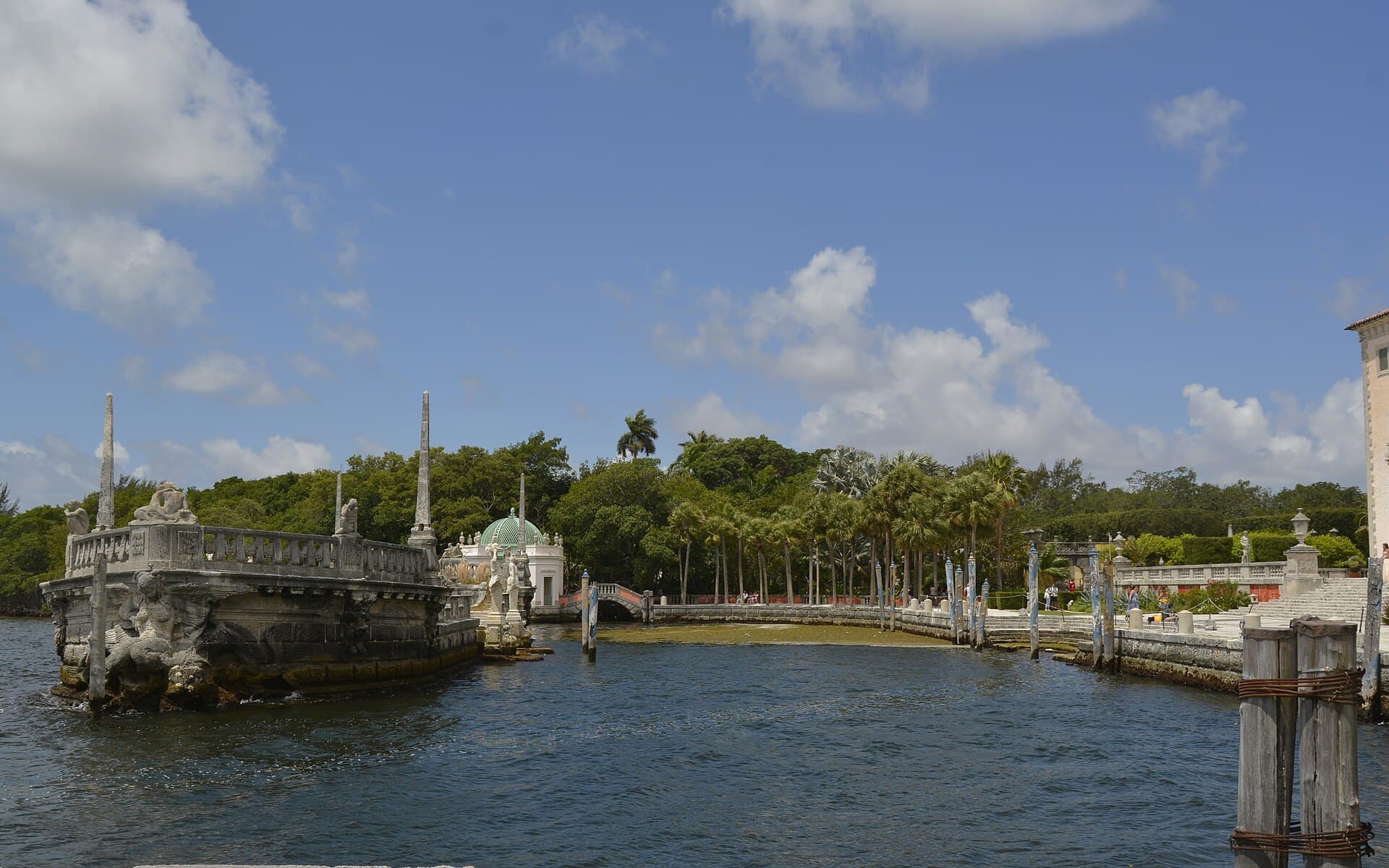
Little Havana is 3.2 road miles from Bayside and Vizcaya is 3.8, which is nine clear-road minutes each. Both sound like a walk from downtown and neither is on the Metromover, which does not reach Little Havana, Vizcaya, Coconut Grove or Miami Beach. Worth knowing on that last one: no rail of any kind crosses Biscayne Bay, so Miami Beach is a bus or a car from the mainland and always has been.
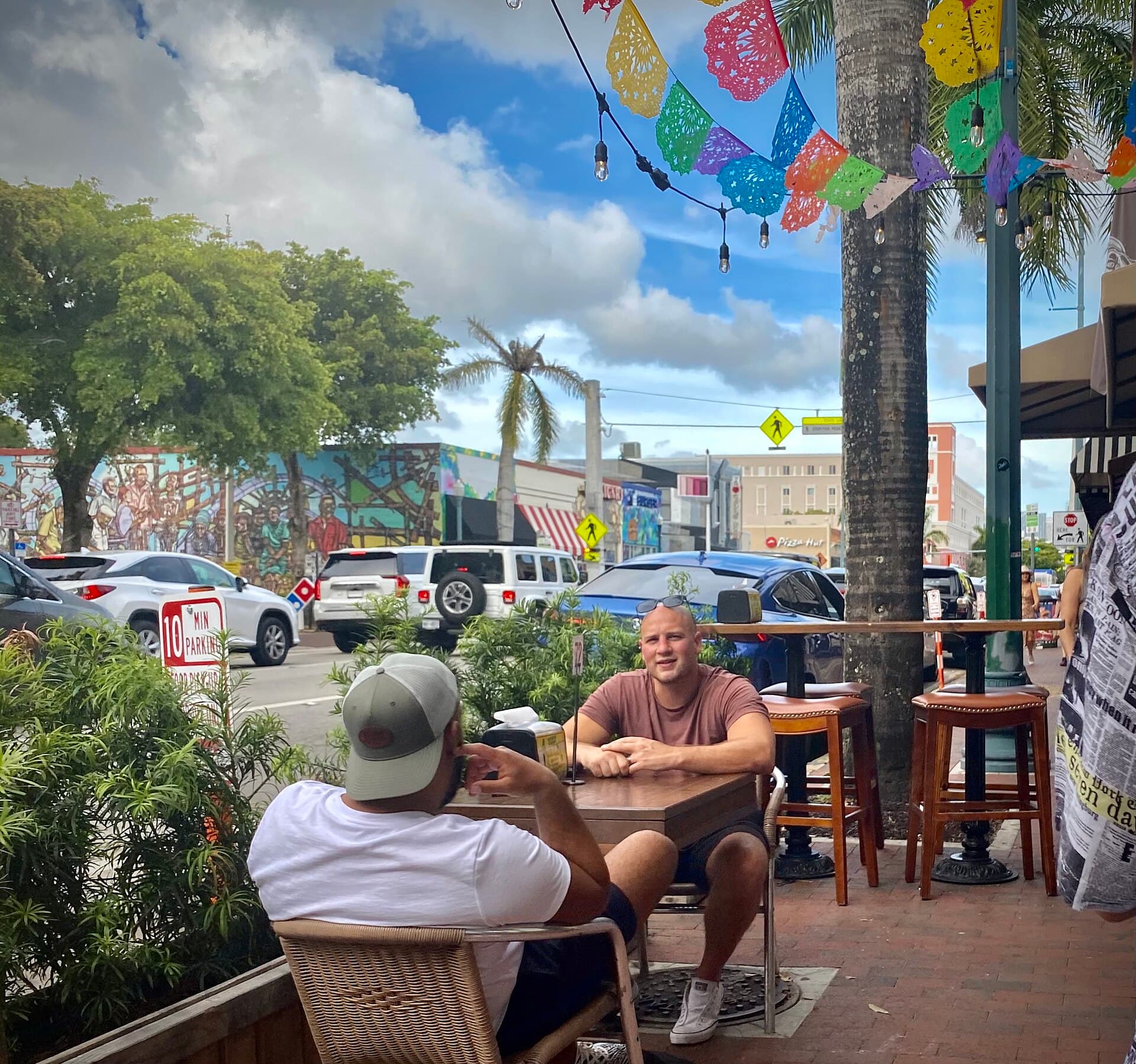
Vizcaya is the one genuine exception on the whole system. It has a Metrorail station of its own, named Vizcaya, and the walk from platform to entrance runs about ten minutes over a pedestrian overpass across US-1. If you would rather drive, the parking there is free in two lots, which is worth noting because downtown parking is not. A food tour of Calle Ocho runs two and a half to three hours for six to eight tastings across about half a mile, and public departures cap at fourteen people, so it fills an afternoon on its own.
Zoo Miami is a whole day, and the bus only runs at weekends
Zoo Miami is 20.6 road miles from downtown, 36 minutes with an empty road. It is Florida's largest zoo at 740 acres, and its own pages put the walkway total between three and four miles, which is the entire planning problem in one number. The zoo's stated average visit is four to five hours. The Zoofari monorail that used to shorten those walks ran from 1982 until it was decommissioned in 2022, so what remains is a separately ticketed tram and a lot of walking in South Florida heat.
Getting there without a car is close to impractical. Metrorail stops nine road miles short at Dadeland South. The public bus route that serves the entrance does so at weekends only, and on weekdays the nearest stop is a couple of miles from the gate. This is a day you give to the car, or a day you skip.
What an Everglades airboat tour from Miami actually is
This is the part worth reading closely, because the marketing is more accurate than most people assume. The National Park Service authorizes exactly three commercial airboat operators to run inside Everglades National Park: Coopertown, Gator Park and Everglades Safari Park. All three sit on small pockets of private land along the Tamiami Trail and run their tours over federal park water. The arrangement comes from a grandfather clause in the 1989 act that expanded the park, and the same act closed the rest of the park to airboats entirely. Airboats are confined to a mapped zone in that eastern addition and are prohibited everywhere else in the park.
So when Everglades Safari Park describes itself as running national park airboat tours, that is a legal fact rather than a stretch. It is 29.4 road miles west of downtown, 44 minutes clear, and its own site says 35 to 40. A visit runs two to three hours with the ride, the wildlife show and the trail, and the last airboat leaves at 4:30pm, which is the deadline that matters rather than the 5pm close.
Everglades Alligator Farm is a different proposition and is straightforward about it, advertising no national park entry fees right in its site header. It sits in Homestead, near the road into the park's main entrance, with more than 2,000 alligators and feeding and handling shows on a posted schedule. Both are worth a morning. They are simply not the same product.
And what an airboat tour is not
There are no airboats at Shark Valley, none at the Homestead entrance, and none at Gulf Coast. The Park Service states this plainly on each of those pages, because people turn up expecting otherwise. Shark Valley's offering is a two-hour narrated tram along a fifteen-mile loop, thirty miles west of Miami on the same road as the airboat concessions. The Homestead entrance is where the Anhinga Trail is, an 0.8 mile wheelchair-accessible boardwalk that is the classic place to stand and watch an alligator do nothing.
The single most useful fact about the park for anyone based in Miami: the entrances do not connect. You cannot drive between the Homestead entrance, Shark Valley and Gulf Coast from inside the park, and the Park Service says each is at least an hour from the others. If you want the national park proper rather than an airboat, budget for a vehicle entrance fee, $35 for seven days as of August 2026, and note that the park is cashless.
Pick one Everglades, because they are an hour from each other
This trips up more itineraries than anything else in Miami. Everglades Safari Park is 44 minutes west of downtown. Everglades Alligator Farm is 61 minutes south. And the two of them are 36 road miles and a full hour apart, because no road crosses the sawgrass between them: the route runs nine miles back east, eighteen south on Krome Avenue, then west again. Two things both called the Everglades, an hour apart, in opposite directions from your hotel. Choose one and give it the morning.
If you want to pair the Homestead trip with something, the better match is the zoo. Zoo Miami to Everglades Alligator Farm is 23.7 miles and 37 clear-road minutes, meaningfully closer than the two Everglades venues are to each other, and both are in the same southern direction.
So how many days?
Two full days covers the headline list without anyone crying in a rental car. Day one is downtown on foot and on the Metromover, with the bay cruise, the wheel and the bus, and Little Havana or Vizcaya bolted on in the afternoon since both are nine minutes away. Day two points in one direction and commits: west to the Everglades, or south to Homestead and the zoo. A third day gets you whichever of those two you did not do.
That shape also decides whether a pass pays. Go City rewards stacking two or three paid attractions a day, which is exactly what Miami's geography resists, and its biggest tier counts attractions as far away as Orlando, Daytona Beach and Key West among the forty it covers. It never covers parking and never includes public transport. The pass is not the problem; the driving between the things on it is. The rest of the city is on our things to do in Miami page.